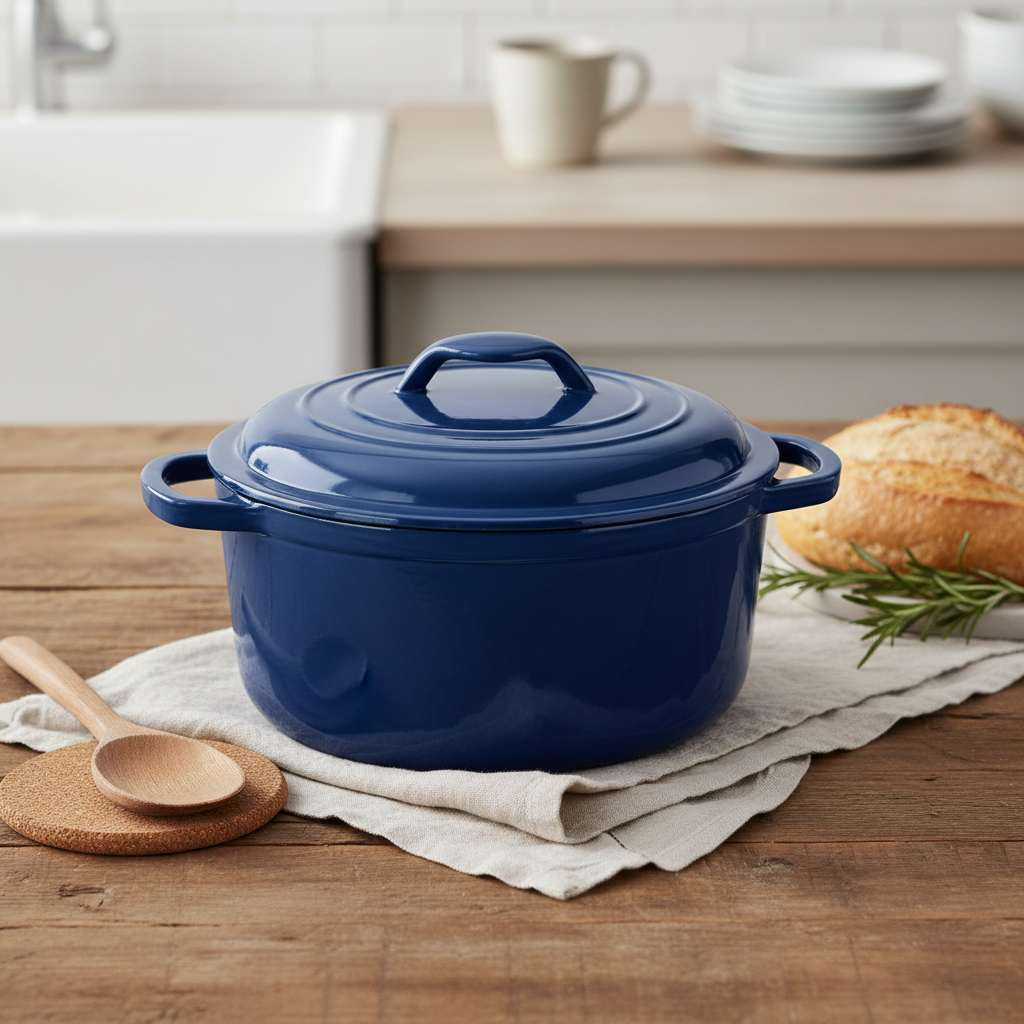


In the premium cookware market, the le creuset casserole price is often viewed as a benchmark for quality, yet it reflects a complex intersection of material science and brand heritage. For professional chefs and home enthusiasts alike, understanding the cost structure of high-end cast iron is essential for making an informed procurement decision.
The primary challenge for buyers is determining whether the premium price aligns with the actual thermal performance and longevity of the vessel. As manufacturing technologies evolve, the industry is seeing a shift toward a broader range of cast iron options that challenge traditional pricing models while maintaining rigorous safety and durability standards.
This analysis explores the technical factors influencing the valuation of cast iron cookware and examines how le creuset casserole price benchmarks compare to industrial manufacturing capabilities in terms of heat retention and surface treatment.


The core value of a high-end casserole lies in its ability to maintain a steady temperature across its entire surface. Cast iron's high thermal mass ensures that the vessel does not lose significant heat when cold ingredients are added, which is critical for slow-braising and searing.
Enameled coatings add a layer of chemical stability, preventing the iron from reacting with acidic foods. This combination of heavy-duty metal and glass-like enamel is what drives the production cost and subsequent retail price in the luxury segment.
A critical specification in cast iron production is the bottom thickness. A thickened base is engineered to "super lock" the temperature, ensuring that heat is distributed evenly and preventing the formation of hot spots that can burn food. This engineering requirement is a primary differentiator between budget-grade and professional-grade cookware.
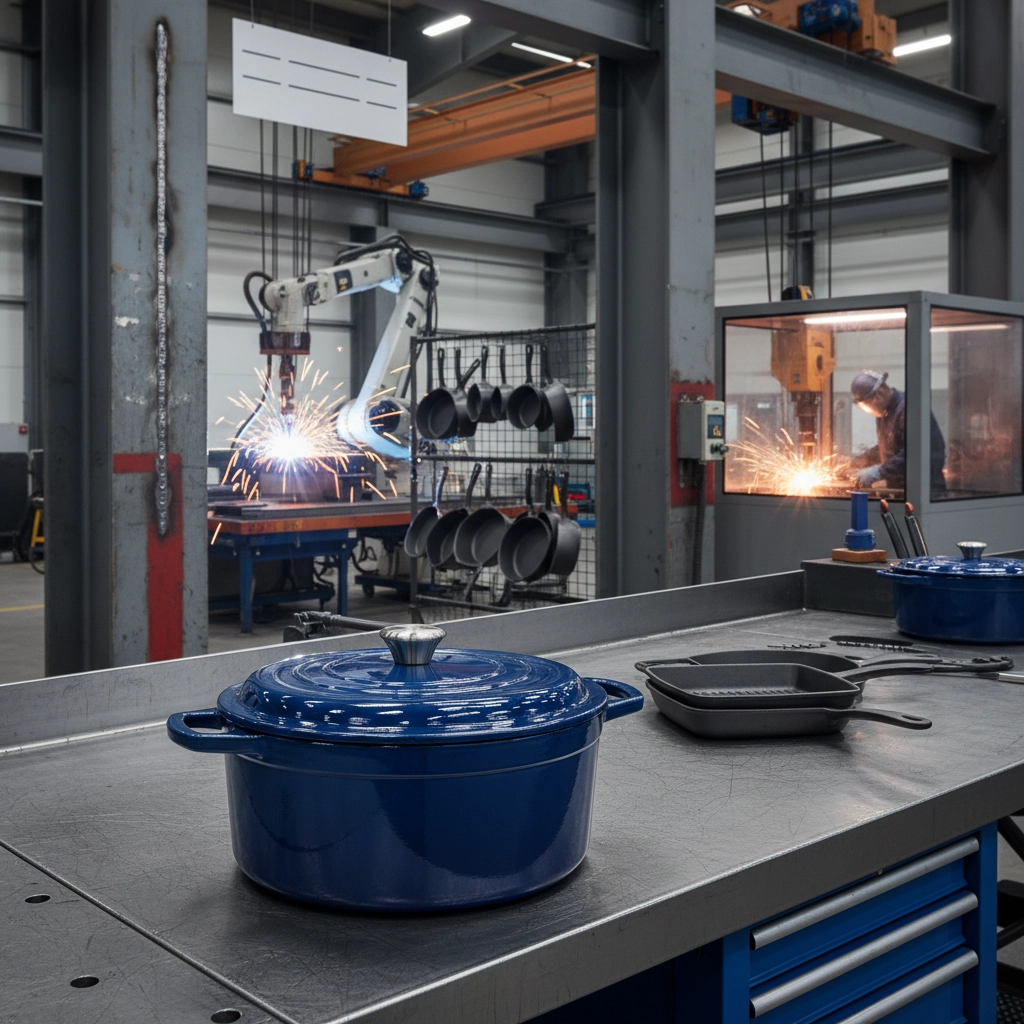
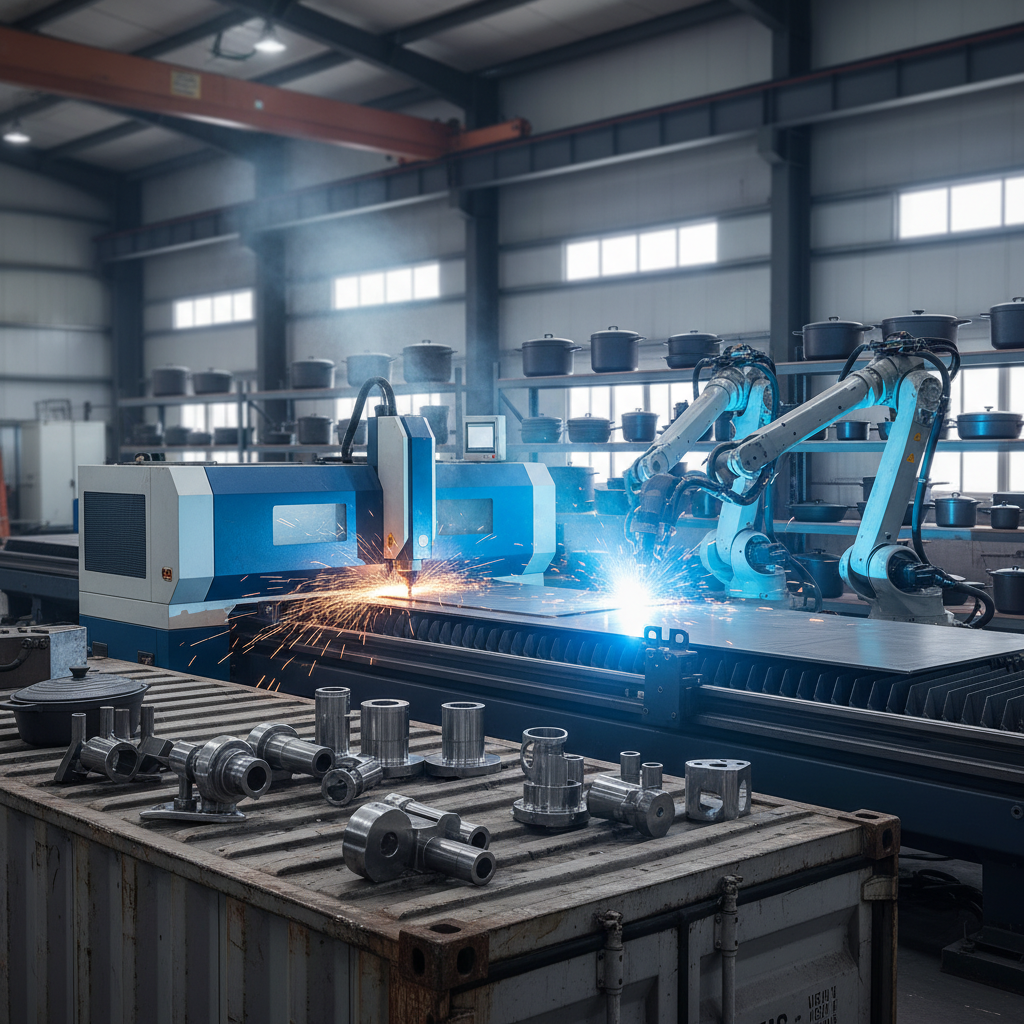
The molecular structure of the iron must be consistent to avoid casting voids, which can compromise structural integrity under extreme temperature cycles. High-precision casting lines, such as those utilizing automatic vertical parting-type box-free injection molding, are used to ensure this consistency.
Furthermore, the compatibility with various heat sources—including gas, induction cookers, and open fires—requires a precise balance of material purity and surface flatness. This versatility increases the utility value for the end-user but requires more stringent quality control during the machining phase.
Surface treatment in cast iron generally falls into two categories: enameling and seasoning. While enameling provides a smooth, non-reactive surface, seasoning involves the polymerization of fats to create a natural non-stick barrier.
From a health perspective, high-quality non-stick coatings must be environmental and safe, avoiding harmful chemicals. The industry trend is moving toward pre-seasoned options that utilize vegetable oil lines to ensure a healthy, food-grade cooking surface right out of the box.
Evaluating the le creuset casserole price requires comparing it against other professional-grade alternatives. The valuation is typically split between material costs, manufacturing precision, and brand equity. When analyzing purely technical performance, the gap between ultra-premium and high-end industrial cast iron often narrows.
The following assessment uses a normalized engineering score to compare the perceived value of various cast iron configurations based on thermal stability, surface durability, and weight-to-performance ratios.
In commercial kitchen environments, the requirements for cast iron differ from home use. Industrial-grade cookware must withstand constant thermal shock and aggressive cleaning protocols. This is where customizable configurations, such as varying material thickness for specific heat-zone needs, become essential. For instance, a 10mm steel or iron base is often preferred for high-volume searing to eliminate hot spots.
Representative engineering scenarios include the use of specialized grill plates and multipurpose pots in high-heat outdoor catering. In these contexts, modular attachments—such as swapping flat zones for grill marks—allow the operator to adapt the equipment to a diverse menu, from Asian-style stir-fries to traditional braised dishes.
The industry is moving toward higher degrees of automation in the casting process. The integration of CNC lathes and advanced machining centers allows for tighter tolerances in the fit of lids and the flatness of bases, which directly affects energy efficiency on induction surfaces.
Environmental pressure is also driving the development of new, eco-friendly enamel formulations and vegetable oil seasoning lines. These innovations aim to reduce the carbon footprint of the manufacturing process while maintaining the food-contact safety certifications required by international standards like FDA and LFGB.
We anticipate a rise in "hybrid" cookware that combines the heat retention of cast iron with lightweight exterior shells or specialized composite handles to improve maneuverability without sacrificing the core thermal benefits of the metal.
When evaluating options, buyers should look beyond the brand name and focus on technical metrics. The choice between an enameled pot and a pre-seasoned skillet depends entirely on the intended application—acidic stews require enamel, while high-heat searing is best served by seasoned iron.
Weight is often a trade-off for performance; heavier bases provide better temperature stability but require more effort to handle. A balanced selection involves matching the thickness of the metal to the specific cooking method, such as using a thinner wall for quick-boiling milk pans and a thicker base for stock pots.
The following matrix provides a technical comparison of different cast iron configurations to assist in the procurement process.
| Configuration Type | Thermal Stability | Surface Type | Recommended Use Case |
|---|---|---|---|
| Basic Configuration | Moderate | Standard Enamel | General Home Cooking |
| Standard Configuration | High | Pre-Seasoned Oil | Searing and Frying |
| High-Duty Configuration | Ultra-High | Industrial Enamel | Commercial Braising |
| Precision Configuration | Consistent | Polished Iron | Delicate Fish / Gourmet |
| Automated Configuration | Uniform | Hybrid Coating | Induction-Heavy Kitchens |
| Industry Baseline | Variable | Raw Cast Iron | Traditional Camp Cooking |
The price is driven by the high cost of high-grade cast iron, the multi-stage enameling process, and the precision machining required to ensure a perfect seal between the lid and the pot. Additionally, rigorous quality testing and international food safety certifications add to the overhead, ensuring the product is free from contaminants and durable enough for lifelong use.
Both are safe if manufactured correctly. Enamel provides a non-reactive barrier that is ideal for acidic foods (like tomato sauce), preventing metallic tastes. Seasoned cast iron uses polymerized vegetable oils to create a natural non-stick surface. The choice depends on whether you prioritize the ease of cleaning and non-reactivity of enamel or the high-heat versatility of seasoned iron.
A thicker bottom increases the thermal mass of the pan, which allows it to "super lock" heat. This means the pan maintains a more constant temperature even when large amounts of cold food are added, leading to more even browning and reducing the likelihood of hot spots that cause food to burn in specific areas.
Most cast iron is naturally ferromagnetic and works on induction. However, the efficiency depends on the flatness of the base. Precision-machined bases ensure maximum contact with the induction surface, reducing energy loss and ensuring faster heat transfer. Buyers should verify that the pan has a flat, machined bottom for optimal induction performance.
When properly maintained, cast iron is virtually permanent. Enameled pots can last decades if protected from extreme thermal shock (e.g., putting a hot pot in cold water). Seasoned iron can actually improve with age, as the seasoning layer becomes more robust, making it one of the most sustainable choices in cookware.
For slow-cooking and stews, prioritize a heavy enameled casserole for heat retention and acidity resistance. For searing, frying, and oven-to-table versatility, a pre-seasoned cast iron skillet or multipurpose pot is superior. Evaluate the weight and handle ergonomics based on how often you will need to move the vessel while it is full of food.
The analysis of the le creuset casserole price reveals that while brand prestige is a factor, the underlying value is rooted in thermal engineering and material purity. The ability to distribute heat evenly and maintain surface integrity over decades is what justifies the investment in high-end cast iron.
For those seeking a balance between professional performance and industrial customization, exploring specialized manufacturing options can provide the same technical benefits—such as thickened bases and safe non-stick coatings—tailored to specific culinary needs. Quality cast iron remains a cornerstone of the kitchen, bridging the gap between traditional craftsmanship and modern material science.

Inquire Now for Cast Iron Cookware Deals
Please Fill Out The Form Below And Our Team Will Get Back To You With Pricing, Product Details, And Customization Options.

Debien is advancing with time, updating equipment, elaborately carving out our brand, focusing on developing high-end products, and actively responding to market demands with creativity.


QUICK LINKS
CONTACT US
Debien is advancing with time, updating equipment, elaborately carving out our brand, focusing on developing high-end products, and actively responding to market demands with creativity.
Copyright © 2026 HEBEI DEBIEN TECHNOLOGY CO., LTD. All Rights Reserved. Sitemap | Privacy Policy | Top Blog | Global Service | Hot Products | Knowledge